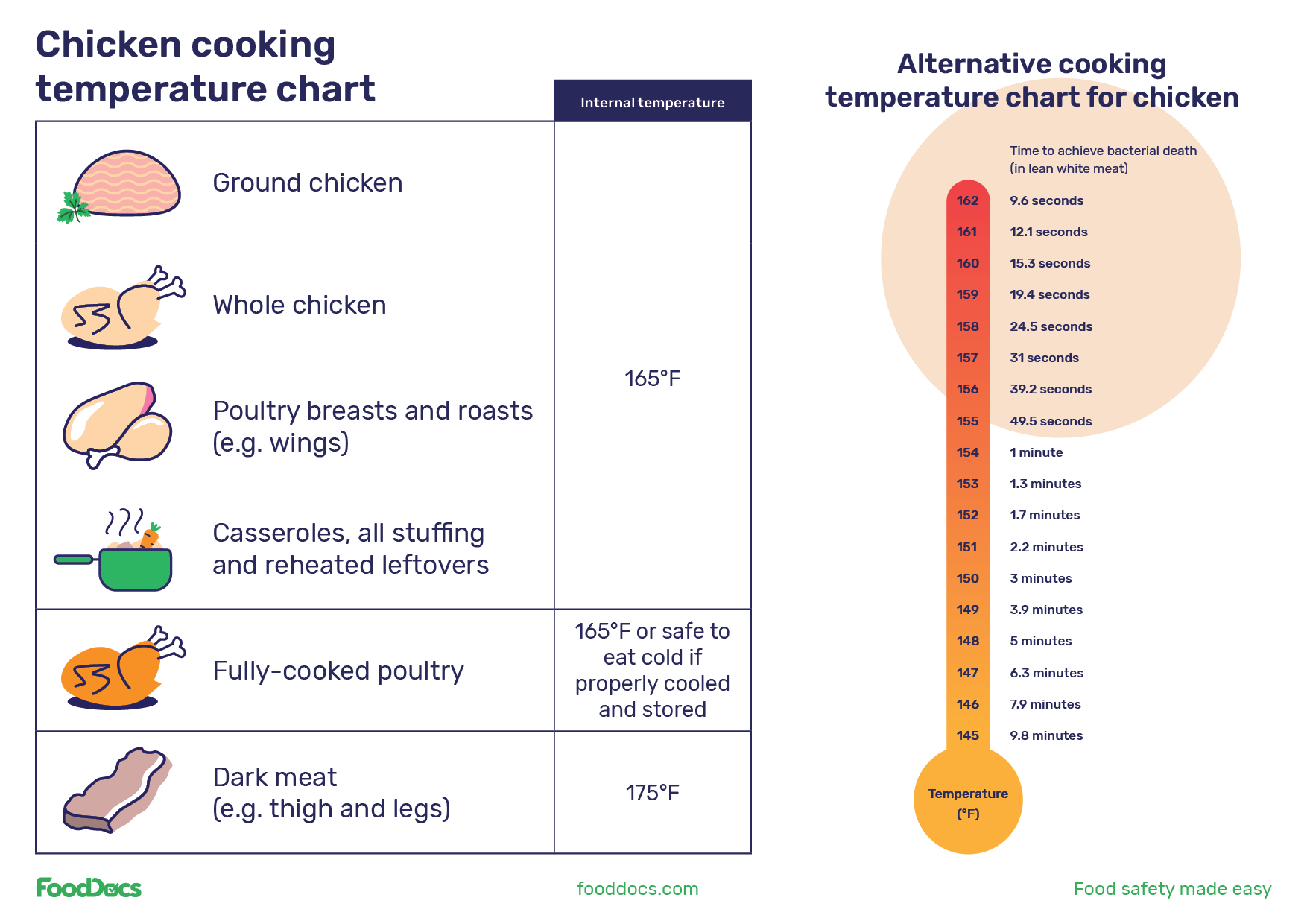
So, what temperature should you cook chicken to? The simple, government-approved answer is 165°F (74°C) in the thickest part. Don’t argue with the food scientists. They’ve done the math on Salmonella so you don’t have to.
But here’s the thing: 165°F is the safe number. It’s the kill zone. Want juicy, tender white meat? You might have to get a little more strategic. Dry, stringy chicken at 165°F? Yeah, that’s a real problem.
White Meat vs. Dark Meat: A Tale of Two Chickens
Let’s start with chicken breasts. They’re the drama queens of the poultry world. 165°F is the law, but cooking a breast to 165°F in a pan often means the inside is overcooked by the time it rests.
Here’s my secret: pull the breast off the heat at 155°F. No, don’t panic. That little rebel will keep cooking. It’s called “carryover cooking.” Let it rest for 5-10 minutes under foil, and the temperature will naturally climb past 165°F. And you’ll get juice, not sawdust.
Thighs and drumsticks? They’re the forgiving friends. They have more fat, so they stay moist even at 175-185°F. That’s the sweet spot for collagen to melt. My grandmother never used a thermometer—she just cooked legs until the skin was crackling and the meat pulled clean. But she had magic hands. You have a thermometer. Use it.

