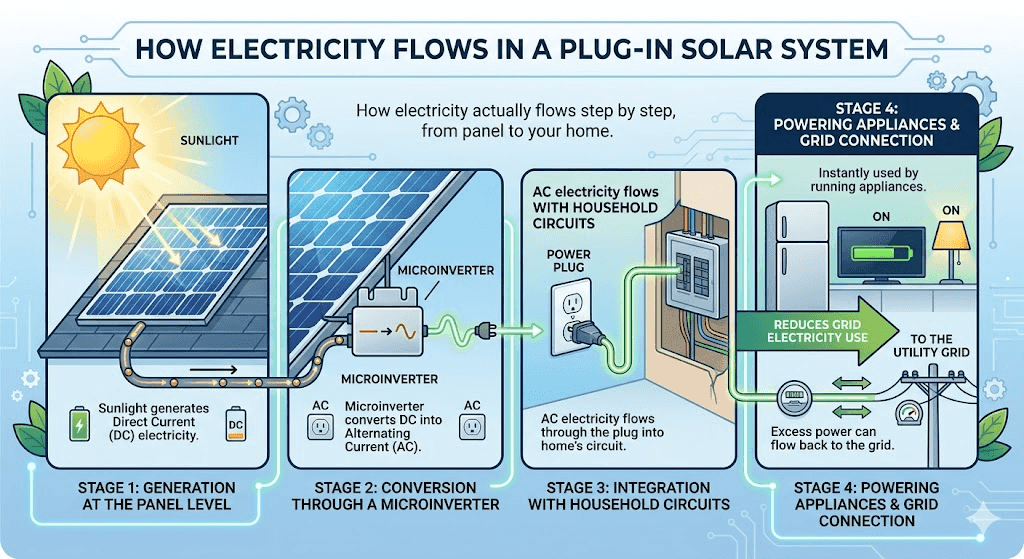
Traditional solar panels are a whole production. You need an electrician, permits, roof drilling, and a conversation about your home’s electrical panel that lasts three hours. Plug-in panels? They skip the drama.
You just set them on a balcony, a patio, or even in your yard. Then, you literally plug them into a standard wall outlet. That’s it. You’re now a tiny, humble sun-wrangler.
But how does the sun’s energy travel through your toaster? It’s not magic, but it feels a bit like it. Let's pop the hood.
Step 1: The Panel Catches Some Rays
The panel itself is full of photovoltaic cells. Fancy name, simple job. When sunlight hits them, they get excited—like a golden retriever seeing a tennis ball.
This excitement creates direct current (DC) electricity. Your house, however, runs on alternating current (AC). It’s like trying to speak French to a Spanish speaker.
So, we need a translator. And that translator is a tiny box called a microinverter. Most plug-in panels have one built right into the back. Sneaky, right?

