
We’ve all been there. Maybe there are blank rows scattered around like landmines. Or columns that should really be rows (why do people do that? I digress).
Highlight the mess, then use the Format as Table trick. Excel will still try to guess your headers. If it picks a blank cell as a header, uncheck the “My table has headers” box. It’s not cheating—it’s survival.
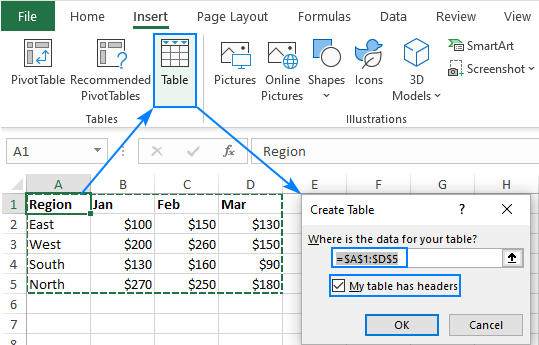 How to create a table in Excel
Once the table is created, you can easily delete blank rows by filtering that column for blanks. Select them, right-click, delete row. Clean as a whistle.
Let’s talk about the “Secret Weapon” feature
It’s called Structured References. Sounds scary, but it’s just Excel’s way of saying, “I know you meant this whole column.” When you write a formula in a table, you’ll see things like =@[Column1]+@[Column2]. That little @ sign means “this row only.”
Don’t be afraid of it. Copy that formula down, and Excel adjusts it perfectly. It’s like having a tiny spreadsheet robot do your homework.

